LOTRO's Mordor Expansion Revisited: What Standing at the Black Gate Meant
A look back at Lord of the Rings Online's Mordor expansion, the moment the game finally reached Sauron's doorstep and had to tell a story that wasn't Frodo's.
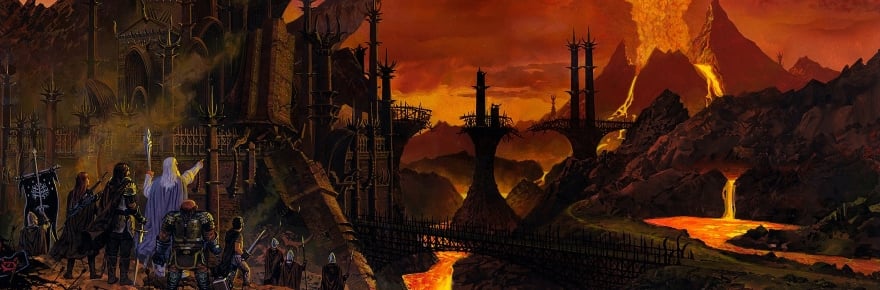
Lord of the Rings Online reached the Black Gate with its Mordor expansion in 2017, and that arrival was the biggest storytelling problem the game had faced since launch. Standing Stone Games had spent a decade walking players north, east and south across Middle-earth, and every road pointed at the same place. The catch was that the road belonged to Frodo, Sam and Gollum. Players were never going to carry the Ring, and everyone logging in already knew how that journey ends.
The Massively Overpowered column LOTRO Legendarium took a look back at the expansion and framed it as a crossroads for the game. That framing holds up. Mordor was the first time LOTRO had to build a major region where the famous story had already happened, or was happening just out of sight, and the player character had to find a reason to be there.
A region built around someone else's climax
The expansion landed in the summer of 2017 and put level 105 characters into the wastes beyond the Black Gate. Udûn, the Plateau of Gorgoroth and the fortress of Barad-dûr gave players a landscape they had read about for decades. The design team had to fill that landscape with quests, factions and enemies while keeping the Fellowship's path intact. You couldn't kill the Mouth of Sauron before Aragorn did, and you couldn't wander into Mount Doom at the wrong moment.
What the expansion did instead was give players their own war. The Host of the West pushed into Mordor after the Ring was destroyed, and players worked alongside it to clear out the remaining orcs and stabilize a broken land. That choice kept the books' timeline safe and gave the player a job that felt earned. You weren't the Ring-bearer. You were one of the people who had to clean up after the biggest battle in the story.
What the expansion actually added
Mordor raised the level cap to 115 and introduced the High Elf race, a playable option for people who wanted a more ancient elven character. It also brought the Allegiance system, which let players swear to one of several factions and earn rewards through a separate reputation track. The expansion shipped with its own instance cluster and a raid, The Abyss of Mordath, which sent players into the depths beneath the ruined land.
Those systems drew mixed reactions. Some players liked the heavier focus on questing through a single, dense region. Others found the Allegiance grind and the expansion's itemization changes harder to love, and the level cap jump reset a lot of gear people had spent months chasing. Looking back, Mordor marks the point where LOTRO's endgame started leaning harder on long reputation tracks and layered currencies.
Dieser Beitrag wird in seiner Originalsprache veröffentlicht.